
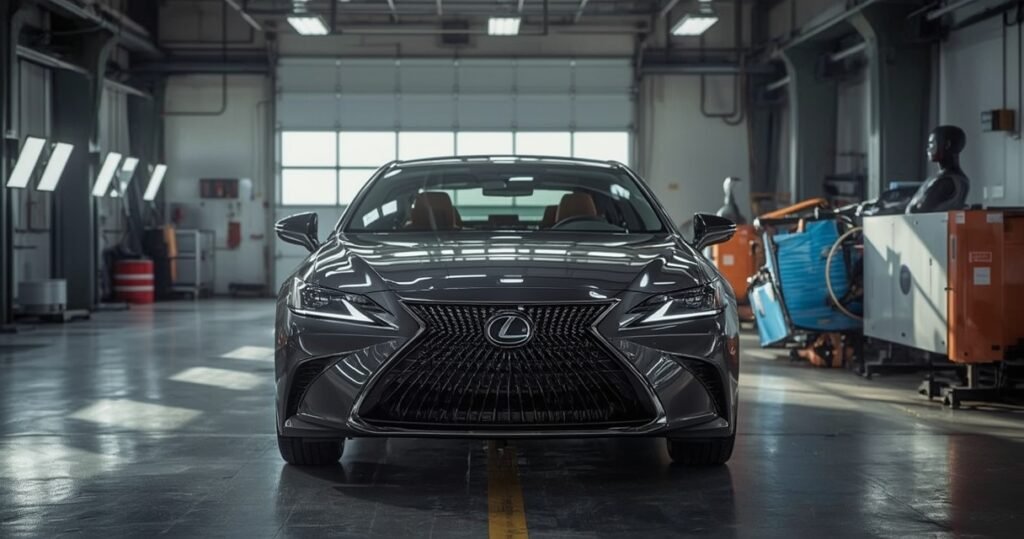
Lexus, the luxury vehicle division of Toyota, has long been associated with sophistication, advanced technology, and superior comfort. However, prospective buyers often wonder about their safety credentials. As safety is a paramount concern for many drivers and their families, understanding how Lexus models perform in real-world scenarios and crash tests is essential. This article explores various dimensions of the question: are Lexus safe cars? We will examine crash test data, advanced safety features, real-world performance, and what the experts say about Lexus vehicles, aiming to provide a comprehensive and factual overview.
Crash test performance of Lexus vehicles
One of the most reliable ways to assess the safety of a car brand is by reviewing crash test ratings from established organizations such as the National Highway Traffic Safety Administration (NHTSA) and the Insurance Institute for Highway Safety (IIHS). Lexus vehicles routinely undergo rigorous testing by these authorities, which evaluate their ability to protect occupants in various collision scenarios.
NHTSA ratings
The NHTSA conducts frontal, side, and rollover crash tests, assigning vehicles an overall safety rating of up to five stars. Most Lexus models, including popular options like the Lexus RX, ES, NX, and LS, frequently achieve four- or five-star ratings. For example, the Lexus RX and ES have consistently received five-star overall safety ratings in recent years, indicating robust occupant protection and well-balanced crash performance.
IIHS Top Safety Picks
The IIHS utilizes a different approach, focusing on areas such as moderate overlap front, small overlap front, side-impact, roof strength, head restraints, and, in recent years, front crash prevention technologies. Several Lexus models regularly earn IIHS accolades, such as Top Safety Pick or Top Safety Pick+, reflecting their excellence across multiple safety domains. The Lexus ES sedan, for instance, has achieved Top Safety Pick+ status in multiple years, thanks to its strong crashworthiness and advanced crash avoidance technology.
How Lexus compares to competitors
In head-to-head comparisons with other luxury brands, Lexus models often score equally or higher in crash safety. Vehicles from competitors like Mercedes-Benz, Audi, and BMW may also perform well in crashes, but Lexus cars’ consistent results demonstrate a corporate priority on occupant safety that matches or exceeds industry standards.
Standard and advanced safety features in Lexus cars
Beyond crash test performance, one of the defining characteristics of Lexus vehicles is their suite of standard and optional safety features. Over the past decade, Lexus has systematically equipped its models with advanced active and passive safety technologies.
Lexus Safety System+
A key innovation in the Lexus lineup is the Lexus Safety System+ (LSS+), a package of technologies designed to help prevent accidents or reduce their severity. LSS+ is now standard on most new Lexus vehicles and includes:
- Pre-collision system: Detects potential frontal collisions and can automatically apply brakes or help avoid a crash.
- Lane departure alert: Warns drivers and can gently steer the vehicle back if it unintentionally leaves its lane.
- Dynamic radar cruise control: Maintains a safe following distance from vehicles ahead, automatically adjusting speed as needed.
- Automatic high beams: Changes from high to low beams depending on oncoming traffic and lighting conditions.
Recent innovations, such as Lexus Safety System+ 2.5 and 3.0, incorporate additional features like cross-traffic alert, traffic sign recognition, and advanced lane tracing assist, reflecting ongoing commitment to driver and passenger safety.
Passive safety in Lexus
Lexus cars are engineered with multiple layers of passive protection. Reinforced passenger compartments, crumple zones, and side-impact door beams all work together to keep occupants safe. Modern models typically come with a full array of airbags, including driver’s knee airbags and rear side airbags, ensuring comprehensive protection in the event of a crash.
Real-world safety: reliability and accident outcomes
Crash test data and safety technology provide solid indicators, but real-world accident statistics are crucial to answering the question, “are Lexus safe cars?”
According to data collected by insurance industry organizations and traffic authorities, Lexus vehicles tend to have lower injury claim rates compared to many peers in the luxury segment. This trend is consistent with Lexus’s reputation for reliability and engineering robustness, traits that often translate into safer outcomes during collisions or emergency maneuvers.
In addition, Lexus vehicles benefit from high reliability scores in industry surveys, like those conducted by J.D. Power and Consumer Reports. A car that is less likely to experience mechanical failures is also less likely to put occupants in unsafe situations, supporting the perception of Lexus cars as a safe choice.
Expert recommendations and safety awards
Automotive safety experts frequently cite Lexus vehicles among the top choices for safety-conscious buyers. Reviewers and analysts at reputable automotive publications often highlight Lexus for its blend of luxury and security, noting the consistency of its safety offerings across the model range. Features such as adaptive cruise control, blind spot monitoring, and rear cross-traffic alert—available on most Lexus models—are frequently recommended for drivers seeking enhanced protection.
Further supporting Lexus’s reputation, the brand and individual models regularly receive industry honors for safety, including:
- IIHS Top Safety Pick and Top Safety Pick+ awards
- NHTSA five-star overall safety ratings
- Recognition from leading consumer protection organizations for vehicle dependability
Addressing common myths about Lexus safety
Misinformation and myths can sometimes cloud buyers’ understanding of vehicle safety. Here are some common misconceptions about Lexus cars and clarifications based on reliable evidence:
Myth 1: “Luxury cars focus more on comfort than safety”
While Lexus models are renowned for comfort, their engineering prioritizes safety just as strongly. The brand’s continuous development of advanced crash avoidance and occupant protection systems demonstrates this dual focus.
Myth 2: “All luxury brands are equally safe”
Although many luxury brands perform well in safety testing, Lexus’s consistent Top Safety Pick awards and high NHTSA scores distinguish it as a leader, not just a peer, in vehicle safety.
Myth 3: “Advanced safety features are only available on top trims”
Lexus stands out for offering robust safety technology, such as the Lexus Safety System+, as standard equipment on most new models, making advanced protection accessible at multiple price points.
Tips for maximizing safety in your Lexus
A vehicle’s crash structure and onboard technology provide a strong foundation, but active driver engagement is vital for safety. Here are some expert-recommended tips for Lexus owners and prospective buyers:
- Regular maintenance: Ensure all safety systems, especially electronic ones like emergency braking and lane assist, are checked and updated during scheduled service intervals.
- Understand your safety features: Read the owner’s manual or consult dealership staff to ensure you are familiar with all active and passive safety technologies in your model.
- Stay up to date: Consider software updates for infotainment and navigation systems that may integrate safety updates or improvements.
- Don’t rely solely on technology: Use all available safety aids, but remember that attentive driving and seatbelt use remain the most critical factors for accident avoidance and injury prevention.
Potential limitations and warnings
No vehicle—regardless of brand or price point—is immune to the laws of physics in a severe crash. While Lexus cars are among the safest in their segment, the ultimate effectiveness of safety technology depends on numerous factors, including the crash scenario and the driver’s behavior.
Some advanced features, such as collision avoidance systems, are designed to supplement, not replace, the driver’s judgment and responsibility. In rare instances, sensors or cameras may be less effective due to weather or poor road conditions. Lexus recommends regular calibration and maintenance of these systems to maintain peak performance.
Finally, crash test results may vary depending on the specific model year and configuration. Prospective buyers should review safety scores for the exact Lexus model and trim they are considering.
Why Lexus emphasizes long-term safety and innovation
Lexus’s parent company, Toyota, has a longstanding legacy in automotive safety and reliability. The company invests heavily in research and development to enhance active and passive safety measures, including collaboration with international safety organizations and academic institutions. The goal is continual improvement and adaptation to changing road environments.
Lexus applies this philosophy by updating its safety suites and incorporating the latest advances across its range—not just in flagship models but in entry-level vehicles as well. This democratization of safety technology is part of what makes Lexus a standout in its class.
The evolving landscape of vehicle safety
The automotive industry is rapidly evolving, with new safety technologies such as pedestrian detection, semi-autonomous driving, and AI-powered monitoring systems now available or in development. Lexus continues to invest in next-generation systems, including improved camera and radar technology, predictive accident analytics, and enhanced vehicle-to-vehicle communication. Many of these features are already present in its latest models and will play an increasingly important role in the future of road safety.
Experts advise that drivers looking for long-term safety should choose brands with a demonstrated commitment to upgrading and refining their offering, and in this regard, Lexus remains at the forefront.
Conclusion: Are Lexus safe cars?
Based on crash test results, industry awards, advanced safety features, and real-world reliability, there is strong evidence to support the assessment that Lexus produces safe cars. The brand’s vehicles consistently afford high levels of protection to occupants, both through advanced engineering and comprehensive standard technology. Although no automobile is entirely without risk, Lexus models provide peace of mind for drivers seeking a blend of luxury, innovation, and an unwavering focus on safety. When evaluating the question, “are Lexus safe cars?”, the answer is a confident yes—supported by decades of meticulous development and a proven safety record.