
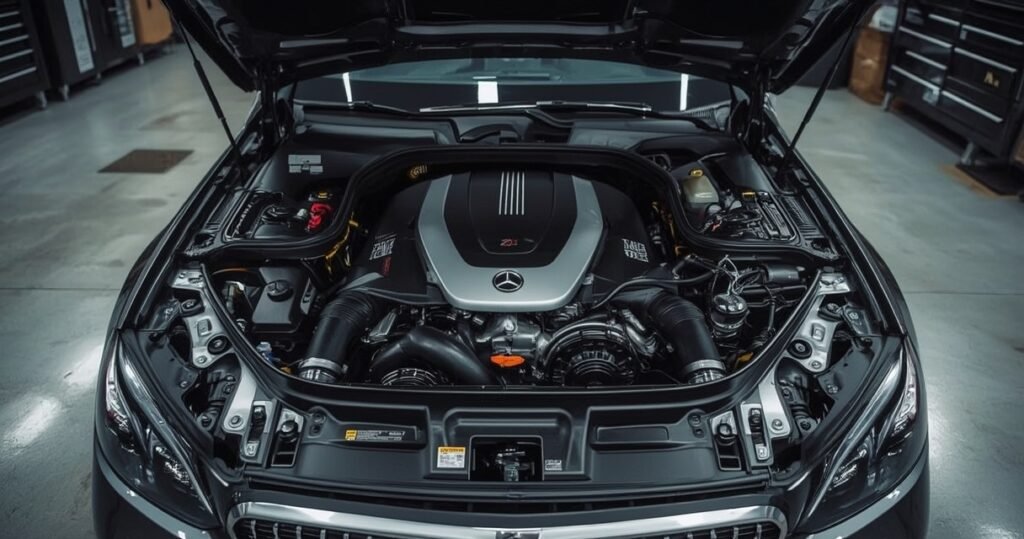
When it comes to luxury performance vehicles, the question “are Mercedes engines reliable?” often arises among prospective buyers, enthusiasts, and critics alike. Mercedes-Benz, a brand synonymous with engineering prowess and innovation, is celebrated for producing high-performance vehicles that are engineered to stand the test of time. Yet, even within this reputation for excellence, the reliability of Mercedes engines remains a topic of discussion and occasional debate. This article provides a detailed, evidence-based exploration of Mercedes engine reliability—covering manufacturing standards, common issues, maintenance requirements, expert opinions, myths, and practical tips for owners. The goal is to enable a clear understanding of what to expect when considering a Mercedes-Benz vehicle.
Understanding Mercedes engineering philosophy
At the heart of the Mercedes-Benz brand lies a commitment to what company engineers refer to as “The Best or Nothing.” Technological advancement, rigorous quality control, and meticulous design characterize Mercedes engines. The company was a pioneer in many core automotive innovations, including the first car powered by an internal combustion engine.
Mercedes engines are designed with performance, efficiency, and longevity in mind. From their inline-four and six-cylinder models to powerful V8s and V12s found in their AMG lineup, engineering standards are exceptionally high. Each engine undergoes stringent testing and validation, reflecting Mercedes’ longstanding tradition of German precision.
How reliability is measured in automotive engines
Reliability, in the context of car engines, means that the powertrain consistently performs as expected over its intended lifespan with minimal unplanned repairs or failures. Industry standards rely on metrics such as the number of engine-related failures per 1,000 vehicles, frequency of major repairs, and the average lifespan before significant component overhaul is needed.
Sources for measuring automotive engine reliability include large-scale owner surveys, independent auto reliability rankings, long-term endurance tests, and recall data from regulatory agencies. Renowned organizations like J.D. Power, Consumer Reports, and TÜV Süd in Germany provide such data-driven reliability scores.
Mercedes engine reliability according to independent rankings
When analyzing whether Mercedes engines are reliable, aggregated data from multiple third-party organizations provides valuable insights. Over the last two decades, Mercedes-Benz vehicles have consistently ranked in the upper echelons of luxury car reliability, but their standing can vary based on model, generation, and engine variant.
J.D. Power’s annual Vehicle Dependability Study and Consumer Reports’ annual car reliability surveys consistently place Mercedes-Benz above industry average for luxury brands. However, it is important to note that luxury vehicles in general face slightly higher repair frequencies due to their advanced technology and complex engineering compared to mainstream brands.
According to independent German safety agency TÜV, older Mercedes diesel engines, notably those in the E-Class and S-Class, have developed a reputation for long-term reliability, often reaching well over 250,000 kilometers with proper care. Later turbodiesels and gasoline direct-injection engines have also displayed good reliability, though some models with advanced emissions systems may require attentive maintenance.
Common Mercedes engine issues and solutions
Despite a positive overall track record, Mercedes engines are not immune to mechanical issues. Awareness of the most common problems can help owners reduce risk through preventive care:
- Oil leaks: Some older engines, particularly V6 and V8 models produced in the late 1990s and early 2000s, are prone to valve cover and head gasket leaks. Regular inspection and timely gasket replacement prevent major engine damage.
- Timing chain stretch: On certain V6 and V8 engines (notably the M272 and M273), premature timing chain stretch or balance shaft wear may occur—especially in vehicles with infrequent oil changes. Using manufacturer-recommended synthetic oils and adhering to service intervals helps mitigate risk.
- Turbocharger issues: Turbocharged four-cylinder engines, present in newer compact models, can experience carbon buildup or actuator issues if service guidelines are neglected. Following warm-up/cool-down procedures and using top-quality fuel are advised.
- Diesel particulate filters (DPF): Mercedes diesel engines fitted with DPFs may face clogging if used primarily for short journeys. Incorporating regular highway driving allows for automatic DPF regeneration.
- High-pressure fuel pumps: Modern direct-injection engines are susceptible to high-pressure fuel pump wear or failure, a concern shared across many premium manufacturers. Using recommended fuel types and additives can help reduce deposit formation.
High-mileage Mercedes engines: What sets them apart?
Mercedes has a storied reputation for producing engines capable of extraordinary mileage. This is best exemplified by several iconic models—especially diesels from the 1980s and 1990s—which are well documented to have exceeded 500,000 kilometers (or even one million miles) with proper maintenance.
Key factors contributing to this reputation include robust engine blocks, over-engineered components, and conservative tuning for durability rather than extreme performance. Classic engines like the OM617 inline-five diesel or the M104 straight-six gasoline unit remain a testament to Mercedes’ ability to build reliable engines for the long haul.
Are newer Mercedes engines as reliable as the classics?
A frequently discussed topic among Mercedes enthusiasts is whether the transition to modern, high-tech engines has impacted their legendary reliability. Advances in emissions controls, turbocharging, lightweight materials, and electronic management systems have brought greater power and efficiency but also increased mechanical and software complexity.
Recent models, such as those with turbocharged four-cylinder or six-cylinder engines (M264, M256), and plug-in hybrid and electric drivetrains, are well designed and often perform admirably in early reliability studies. However, some owners report that occasional electronics glitches or software faults can overshadow mechanical issues.
Expert technicians note that, while modern Mercedes engines can be very reliable, diligent maintenance and precise adherence to factory recommendations become increasingly important. Neglecting regular servicing, using poor-quality fuel, or delaying minor repairs can accelerate wear or trigger cascading issues—an effect magnified by the tighter tolerances and complexity of new engine designs.
Routine maintenance: The cornerstone of Mercedes engine reliability
Owning a Mercedes-Benz, or any highly engineered luxury vehicle, means committing to a comprehensive maintenance program. Service schedules are detailed in the owner’s manual and typically include regular oil and filter changes, inspection of belts and tensioners, coolant flushes, spark plug replacement, and periodic checks of major components.
Most Mercedes engines require fully synthetic oils tailored to their specific tolerances. Regular use of genuine or original equipment manufacturer (OEM) parts, as opposed to cheaper aftermarket alternatives, is strongly recommended. Many independent experts highlight that using authorized dealerships or specialist workshops familiar with Mercedes engineering often yields better long-term outcomes.
Essential tips for ensuring engine longevity
- Adhere strictly to scheduled maintenance and respond promptly to dashboard warning lights.
- Use only quality fuels and engine oils that meet or exceed Mercedes-Benz specifications.
- Allow the engine to warm up gradually before pushing it to high revs or speeds.
- Avoid excessive short trips that inhibit proper oil circulation and engine temperature stabilization.
- Keep detailed service records, which can also help retain vehicle value on resale.
Expert opinions: What mechanics and engineers say
Professional opinions from experienced fleet managers, master technicians, and automotive engineers consistently affirm that Mercedes engines are fundamentally well built and can be highly reliable. However, they emphasize the importance of being proactive in maintenance, as small issues can escalate if neglected given the sophisticated nature of modern Mercedes drivetrains.
Many independent shop owners specializing in European vehicles report that Mercedes engines hold up well compared to competitors. In forums and trade journals, technicians often praise the durability of classic naturally aspirated engines, while noting that newer models—although still generally robust—require highly specialized diagnostic tools and qualified personnel for repair.
According to the Society of Automotive Engineers (SAE), the introduction of digital engine management systems and forced induction in recent years is seen as a double-edged sword: yielding better performance and efficiency but demanding more technical knowledge for proper upkeep.
Debunking myths about Mercedes engine reliability
Over time, several misconceptions have emerged regarding Mercedes engine reliability. Understanding fact from fiction helps consumers make informed choices.
- Myth: All Mercedes engines are overly complex and unreliable. While modern Mercedes engines incorporate advanced technology, this does not inherently mean they are unreliable. In fact, complexity often translates to better efficiency and environmental performance, provided the owner commits to proper care.
- Myth: Diesel Mercedes engines are immune to problems. Even though classic Mercedes diesels are renowned for their robustness, all engines are subject to wear and tear. Newer diesels with advanced emissions systems may require more attentive maintenance.
- Myth: Only dealership service can keep a Mercedes reliable. While dealerships offer specialized expertise, independent mechanics with Mercedes experience and genuine parts can often maintain these vehicles to the same high standards provided they follow factory-approved guidelines.
- Myth: Once out of warranty, Mercedes engines become a liability. With preventive maintenance and timely repairs, many Mercedes engines continue to function well beyond warranty periods. Owner diligence plays a bigger role than brand myth.
Cost of ownership considerations
A key factor influencing perceptions of reliability is the cost of routine servicing, parts, and repairs. Mercedes-Benz vehicles generally have higher maintenance costs than most mainstream brands, a reflection of both the complexity and the premium positioning of the marque.
Owners who skip scheduled maintenance or opt for non-specialist service centers may face higher long-term expenses due to misdiagnosed issues or the use of substandard parts. Conversely, those investing in regular, high-quality service often find that their Mercedes engine delivers smooth, trouble-free performance for many years.
Classic versus modern Mercedes reliability: A generational perspective
Classic Mercedes engines—such as those found in the W123, W124, and W126 series—are often cited as paragons of long-term durability. Much of their reliability is owed to less stringent emissions regulations of their day and robust construction with fewer electronic components.
In contrast, modern Mercedes powerplants offer significant gains in efficiency, safety, and emissions reduction while still providing high reliability when maintained appropriately. Although more parts can potentially fail, component quality and tolerances remain exceptionally high. Most contemporary Mercedes engines can easily surpass 200,000 kilometers with no major issues if properly cared for.
Buying tips: Evaluating Mercedes engine health when purchasing used
For those purchasing a pre-owned Mercedes, engine condition is vital. Here are specific pointers to ensure a good choice:
- Obtain a complete service history. Gaps or missed oil changes can be a red flag for future problems.
- Prioritize models with naturally aspirated engines or pre-owned vehicles with comprehensive dealer maintenance.
- Request or commission a pre-purchase inspection by a specialist. Compression tests and diagnostic scans can reveal hidden issues.
- Check for signs of oil leaks around the valve covers, cylinder head, and timing chain cover.
- Listen for abnormal noises such as knocking, ticking, or rattling, which may indicate wear or component failure.
By following these steps, buyers can avoid costly surprises and secure a vehicle with a reliable powertrain.
Conclusion: Are Mercedes engines reliable in today’s market?
In answering the central question, “are Mercedes engines reliable,” the evidence suggests that Mercedes-Benz continues to build some of the most dependable engines in the luxury automotive segment. Owners who follow the recommended maintenance schedule and use high-quality fluids and parts typically report excellent long-term reliability—regardless of whether the vehicle is powered by a classic diesel, a modern turbo, or a high-performance AMG engine.
While maintenance costs are higher than average, the payoff comes in the form of superior engineering, exceptional performance, and lasting value. By understanding potential issues, dispelling myths, and adhering to expert advice, owners and enthusiasts can enjoy the driving experience that Mercedes-Benz is famous for—confident in the integrity and endurance of its engines.

An experienced automotive writer and industry analyst with a strong passion for cars, engineering, and road performance. Specializes in delivering clear, insightful reviews, detailed comparisons, and practical advice for everyday drivers, gearheads, and those looking to make informed vehicle choices.