
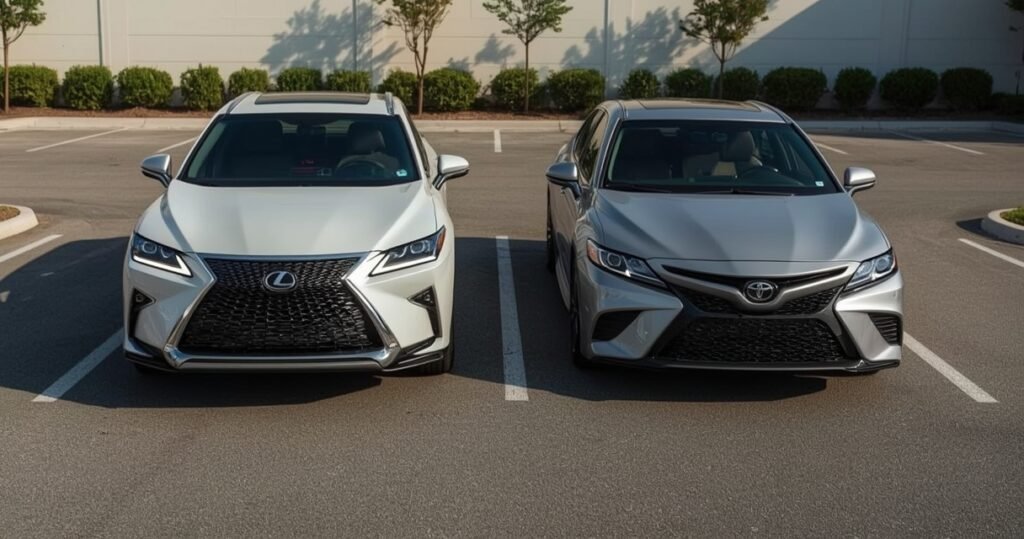
Lexus and Toyota are brands that frequently stand out in discussions about vehicle dependability, longevity, and ownership satisfaction. Toyota’s reputation for manufacturing fuel-efficient, hardy, and practical vehicles is well-established, while Lexus, the luxury division of Toyota, promises superior comfort, technology, and craftsmanship. Given their shared DNA and manufacturing philosophies, many consumers wonder: are Lexus as reliable as Toyota? This article explores the answer, drawing from reliability studies, mechanical engineering insights, owner testimonials, and industry expert opinions to provide a comprehensive, unbiased analysis.
Lexus and Toyota: a shared foundation
To understand how Lexus and Toyota relate to each other in terms of reliability, it helps to first examine their relationship. Lexus was launched by Toyota in 1989 as a dedicated luxury brand aimed initially at the U.S. market, but later expanding globally. While Lexus vehicles boast unique styling, premium materials, and a more refined driving experience, they often share underlying platforms, engines, and components with Toyota models. This shared engineering—leveraged from Toyota’s extensive expertise—forms the base of their dependable reputations in the auto world.
Common engineering practices
Lexus and Toyota vehicles often share:
- Platform architectures and chassis designs
- Powertrains, including engines and transmissions
- Safety and driver-assistance systems
- Manufacturing philosophies emphasizing sustainability and quality control, most notably the “Kaizen” principle of continuous improvement
This overlap plays a major role in why both brands are typically seen at the top of automotive reliability rankings.
How do industry studies compare Lexus and Toyota reliability?
Automotive reliability is frequently assessed by institutions such as J.D. Power, Consumer Reports, and RepairPal, all of which analyze large datasets that include repair frequencies, severity of issues, and long-term durability. Across multiple years, both Lexus and Toyota have scored exceptionally well in these comprehensive studies.
Consumer Reports findings
Consumer Reports, known for its rigorous survey methodology relying on owner feedback and independent testing, consistently ranks both brands near the top. In several annual reports, Lexus has often achieved the number one spot for overall predicted reliability, with Toyota trailing just a few places behind. According to their surveys:
- Lexus owners reported fewer issues per 100 vehicles compared to almost all other luxury brands.
- Toyota’s track record remained well above industry average, especially with core models like the Camry, Corolla, and Prius.
Statistics from such studies suggest that while both brands are highly reliable, Lexus may edge out Toyota by a small margin, in part due to higher standards set for their luxury segment and meticulous attention to detail during the assembly process. However, both brands borrow heavily from the same core technology, which restrains drastic differences.
J.D. Power and RepairPal rankings
J.D. Power’s Vehicle Dependability Study and RepairPal’s annual reliability scores have reaffirmed similar conclusions:
- Lexus has occupied the top spot for luxury vehicle reliability in several consecutive years.
- Toyota consistently ranks within the top five for mainstream automakers, boasting low average repair costs and relatively infrequent trips to the shop.
Interestingly, RepairPal finds that the average annual repair cost for Lexus models is slightly lower than some rivals in the luxury segment but a bit higher than Toyota models. This reflects the difference in vehicle segment focus and the added complexity of luxury performance and technological features in Lexus vehicles.
Key factors influencing reliability in Lexus and Toyota
Understanding automotive reliability requires considering several interconnected elements, many of which highlight the similarities and differences between Toyota and Lexus:
Build quality and materials
Lexus vehicles typically feature higher-grade materials, more intricate design accents, and tighter interior assembly tolerances than standard Toyotas. This contributes to a premium feel and potentially a quieter, more refined cabin experience. However, these enhancements can mean added electronic systems and complex materials, which, in theory, could introduce additional failure points. Despite this, Lexus remains highly dependable, likely owing to rigorous pre-production testing and quality control.
Parts sharing and modular design
A significant advantage for both brands is their use of shared components. For example, the Lexus RX and Toyota Highlander, or the Lexus ES and Toyota Avalon—and previously, the Camry—illuminate how proven powertrains and platforms translate into predictable durability and simplified maintenance routines. For vehicle owners and independent repair shops, this supports easier sourcing of parts and higher mechanic familiarity, further boosting both brands’ reliability ratings.
Service and warranty support
Lexus, as a luxury marque, provides a more comprehensive service experience, with perks such as longer warranties, complimentary maintenance for certain periods, and higher-quality customer service. While Toyota’s warranty is still competitive, Lexus owners often report higher satisfaction with after-sales support—adding to perceptions of bulletsproof reliability, especially in the early years of ownership.
What do expert mechanics say?
Professional automotive technicians frequently note that maintenance on Lexus vehicles mirrors what is required for their Toyota counterparts. Oil changes, brake pad replacements, timing belt service, and suspension work are usually straightforward since many Lexus models utilize tried-and-true Toyota platforms and parts. Experts highlight the following:
- Lexus’ higher-end models may feature additional technology (e.g., air suspension, adaptive cruise control, advanced infotainment) that can raise long-term maintenance costs or introduce rare electrical issues, though such problems remain infrequent compared to competing luxury brands.
- Routine mechanical repairs for both brands rarely involve major component failures, helping maintain lower total cost of ownership over a ten-year period or more.
Overall, mechanics agree that Lexus and Toyota are two of the most serviceable and least problematic brands, especially when owners follow factory-recommended service intervals.
Common myths about Lexus and Toyota reliability
Despite the data, several misconceptions persist regarding the reliability of Lexus compared to Toyota.
Myth: Luxury features doom reliability
Some believe that adding luxury systems—advanced electronics, power accessories, and high-end materials—inevitably undermines long-term reliability. While these features increase complexity, Lexus remains an outlier. Their rigorous development and quality assurance keep failure rates impressively low. Industry data reveals Lexus has fewer reported issues, even as luxury components become standard.
Myth: All Lexus vehicles are “just Toyotas with leather seats”
While platform and powertrain sharing are common, Lexus engineers additional tuning for ride quality, sound insulation, and material upgrades. The vehicles also often receive unique engines or hybrid systems. Thus, although Lexus benefits mightily from Toyota’s proven engineering, the luxury and refinement differences are not superficial—they are intentionally engineered into the vehicles.
Myth: Repairs for Lexus are always much more expensive
Maintenance costs for both brands are generally moderate, with Lexus repairs averaging slightly higher due to luxury features or specialty parts. However, both brands share supply chains and dealer networks, reducing price discrepancies, especially on routine services. Major reliability studies consistently confirm both remain more affordable to maintain than most competitors in their respective segments.
Are there differences in reliability across models?
Both Toyota and Lexus have standout models with exceptional durability, but not all vehicles are created equal. For instance:
- Toyota Camry and Corolla are widely recognized for minimal mechanical trouble and low long-term ownership costs.
- The Lexus RX consistently earns top marks for quality and longevity in the luxury SUV segment.
- Toyota’s hybrid systems, from the Prius to the RAV4 Hybrid, set global standards for reliability—a trend that directly benefits Lexus hybrids such as the ES 300h and UX 250h.
Occasional negative outliers exist, often due to recalls or the introduction of new, untested technologies, but these are rare and tend to be swiftly addressed through recalls and service campaigns. As a general guideline, models with longer production histories and fewer major redesigns tend to exhibit the highest reliability in both brands.
Expert tips for maximizing Lexus and Toyota reliability
Maximizing the reliability of any Lexus or Toyota vehicle is straightforward but requires attentive ownership practices. Industry experts recommend the following:
Follow factory maintenance schedules
Regular oil changes, fluid checks, filter replacements, and tire rotations should never be ignored. Adhering to Toyota’s or Lexus’s maintenance intervals—often displayed on the vehicle’s dashboard or available in the owner’s manual—prevents expensive, avoidable repairs and extends vehicle lifespan.
Address minor issues early
Don’t postpone minor repairs. Catching issues such as small fluid leaks, unusual noises, or check engine lights early prevents escalation and can reduce the risk of major system failures.
Choose quality parts and fluids
Whether visiting an authorized dealer or a trusted independent mechanic, always use quality OEM (Original Equipment Manufacturer) or certified replacement parts. Substandard parts can undermine the brand’s built-in reliability advantages.
Record and track vehicle service
Maintain a log of all servicing, repairs, and recall work. Not only does this help keep the car in the best mechanical condition, it also proves invaluable for resale value.
Beware of neglected used vehicles
Both Lexus and Toyota vehicles are sometimes victims of their own reliability reputation—owners may neglect basic maintenance because the vehicles seem so durable. Always insist on a documented service history when purchasing pre-owned models.
Warnings and considerations
Despite their shared reputation, it’s important to remember no car is invincible. All vehicles require care and periodic repairs. Additionally:
- Lexus cars, because of their advanced features, may require specialized tools or diagnostic equipment in the event of rare electrical faults.
- Performance-oriented Lexus models (like F or F Sport variants) may have stiffer suspensions and different maintenance needs—review these before purchase if comfort and low running costs are priorities.
- Lexus SUV and larger Toyota models tend to feature more complex all-wheel drive or hybrid drivetrain systems. While generally robust, these may carry higher replacement costs if issues arise.
Conclusion: are Lexus as reliable as Toyota?
Years of comparative studies, mechanic observations, and owner experiences make one core answer clear: Lexus are at least as reliable as Toyota overall, if not slightly more so in many measurements. This similarity is rooted in shared engineering, proven technologies, and a rigorous quality-oriented philosophy that governs both brands’ design and manufacturing processes. For consumers, the final decision between Lexus and Toyota comes down to personal preferences in luxury, driving feel, amenities, and budget. Both offer outstanding long-term value, and as long as they are cared for properly, either brand can deliver well over 200,000 miles of dependable use with minimal drama. It is this shared robustness, inherited from Toyota’s engineering heritage and Lexus’s premium craftsmanship, that positions both brands as leaders in automotive reliability—making them wise choices for anyone seeking peace of mind in a world of uncertain motoring.

An experienced automotive writer and industry analyst with a strong passion for cars, engineering, and road performance. Specializes in delivering clear, insightful reviews, detailed comparisons, and practical advice for everyday drivers, gearheads, and those looking to make informed vehicle choices.