
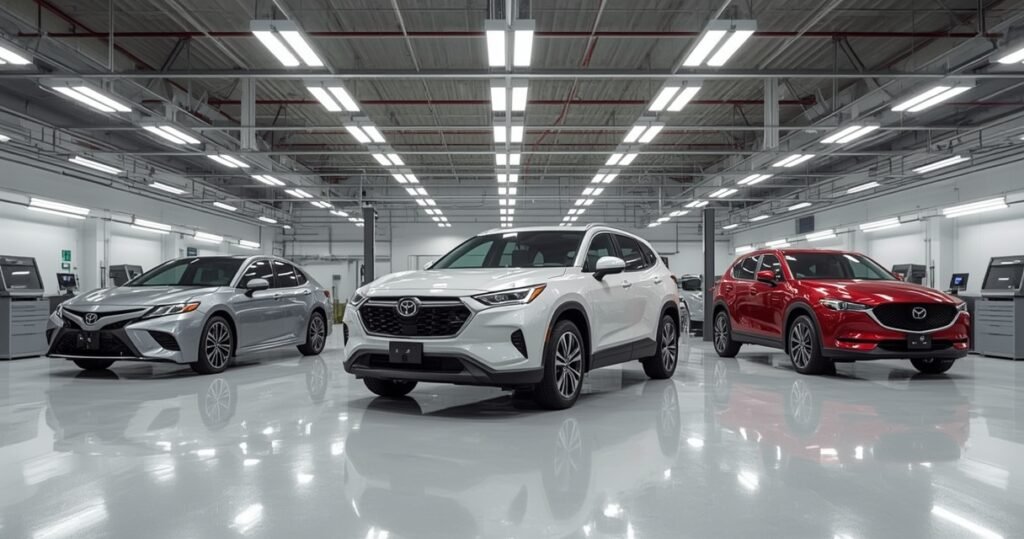
Japanese cars have long enjoyed a reputation for being dependable, economical, and durable. From compact sedans to robust SUVs, these vehicles are popularly chosen across global markets. However, with car buyers increasingly interested in long-term value and minimal maintenance, many ask a straightforward question: are Japanese cars reliable? This article examines the factors contributing to the reliability of Japanese vehicles, investigates the technological and manufacturing principles underlying their reputation, and offers evidence-based guidance for anyone considering a Japanese-made automobile.
Defining reliability in the automotive world
Reliability in the context of vehicles refers to their ability to function with minimal unexpected breakdowns, lower maintenance costs, and consistent performance over time. Reliable cars require fewer repairs, cost less to maintain, and tend to have longer lifespans compared to their peers. Several industry metrics and surveys assess reliability, including the number of reported issues per 100 vehicles, average lifespan in miles, and owner satisfaction studies.
Key measures of vehicle reliability
- Frequency of mechanical failures
- Severity and cost of repairs
- Consistency of performance in various conditions
- Longevity and mileage capabilities
- Customer and expert ratings in large-scale surveys
The legacy of Japanese automotive engineering
The Japanese automotive industry has its roots in precision craftsmanship and a culture of continuous improvement, sometimes referred to as “kaizen.” Following World War II, Japanese manufacturers like Toyota, Honda, Nissan, Mazda, and Subaru committed to producing vehicles that prioritized economy, ease of maintenance, and reliability. This philosophy transformed global perceptions, particularly during the oil crisis of the 1970s, as consumers valued affordable and dependable options.
Fundamental principles behind Japanese car reliability
- Kaizen (continuous improvement): Emphasizes incremental optimization in design, engineering, and assembly processes.
- Quality control: Japanese factories introduced rigorous quality checks, statistical process control, and staff training to detect errors early.
- Simplicity in design: Many Japanese vehicles utilize straightforward engineering, reducing potential points of failure and simplifying repairs.
- Long-term supplier relationships: Close coordination with trusted component suppliers ensures consistent quality and compatibility.
Data-driven evidence: Are Japanese cars really more reliable?
Numerous third-party surveys, consumer reports, and industry studies consistently highlight Japanese brands among the top performers for reliability.
Results from major reliability studies
- J.D. Power Vehicle Dependability Study: Annually, J.D. Power assesses vehicles three years after purchase. In many recent surveys, Japanese brands such as Lexus, Toyota, Mazda, and Honda have repeatedly placed in the top positions for fewest problems reported per 100 vehicles.
- Consumer Reports: This independent nonprofit organization gathers extensive feedback from real car owners, analyzing vehicle reliability and ownership satisfaction. Japanese makes, especially Toyota and Lexus, routinely secure high rankings across multiple models and segments.
- What Car? Reliability Survey (UK): Independent assessments in Europe echo U.S. findings, with Japanese brands—most notably Honda, Suzuki, and Lexus—scoring high for durability and minimal faults even as vehicles age.
These results, compiled from large owner databases and verified repair records, show that Japanese marques outpace many American and European counterparts in both short-term and long-term reliability metrics.
Technological advancements supporting reliability
Japanese car manufacturers consistently invest in incremental technological improvements rather than unproven or overly complex systems. Their approach favors tried-and-tested engineering, balancing innovation with reliability. For example, Toyota’s Hybrid Synergy Drive systems set the standard for hybrid electric reliability without major transmission redesigns. Honda’s naturally aspirated engines are well-known for their longevity and efficiency.
Examples of reliable Japanese automotive technologies
- Engines: Toyota’s 2.0L and 2.5L inline-four engines (code-named 1NZ-FE, 2AR-FE) are recognized for their robust construction and minimal oil consumption, often surpassing 200,000 miles of use.
- Transmissions: Many Japanese automatic transmissions have a reputation for smooth shifting and infrequent failures, particularly Aisin and Jatco units.
- Hybrid systems: Toyota Prius hybrid components, specifically battery packs and electric motors, routinely demonstrate superior reliability compared to many competitors’ early hybrid offerings.
- Manual transmissions: Honda’s manual gearboxes are renowned for their precise feel and exceptional durability, remaining operable even after decades of use.
Japanese automakers often avoid unneeded early adoption of overly complicated new technologies until they have been sufficiently proven, minimizing recurring defects and warranty claims.
Comparing Japanese cars to other global manufacturers
German, American, South Korean, and European brands all offer a spectrum of reliable and less reliable vehicles. However, Japanese automakers regularly set industry benchmarks for two main reasons: consistency and predictability. While some luxury European brands augment vehicles with advanced features, these often bring additional maintenance complexities. American cars, meanwhile, have improved, but certain brands still exhibit variability across model years.
Independent rankings overview
- Toyota, Lexus, and Mazda frequently occupy the top three positions across various global reliability rankings.
- Honda and Subaru also perform above average in head-to-head comparisons, even as their cars age beyond 100,000 miles.
- Premium German brands excel in engineering but sometimes trail due to sophisticated systems prone to expensive faults outside warranty periods.
- South Korean brands, notably Hyundai and Kia, have rapidly closed the reliability gap, but Japanese marques still dominate for long-term dependability.
Common myths about Japanese car reliability
The lineup of Japanese brands is broad and diverse. While their overall reputation is supported by data, certain misconceptions persist. Understanding these myths provides a more nuanced perspective on whether Japanese cars are reliable for every consumer or application.
Myth 1: All Japanese cars are equally reliable
While Japanese brands lead in industry rankings, not every model achieves the same results. Some models—occasionally those with unique features or experimental technology—may experience production issues. Consulting specific reliability ratings by model and year provides a clearer picture before purchasing.
Myth 2: Japanese cars do not require regular maintenance
Even the most durable Japanese vehicles depend on periodic servicing. Skipping recommended maintenance intervals will diminish reliability in any brand. Parts such as timing belts, fluids, and brakes should be inspected and swapped as advised by the manufacturer.
Myth 3: Only Japanese-built cars are dependable
Modern globalized manufacturing sees many Japanese vehicles assembled outside of Japan. The critical reliability factors—design, quality control, and supplier standards—are typically retained through strict oversight, even in overseas plants. However, rare inconsistencies can occur if local parts or standards differ, highlighting the value of researching assembly origins.
Advantages of choosing a reliable Japanese car
There are several practical benefits to owning a Japanese vehicle, especially for people looking for dependable, cost-effective transportation.
Lower total cost of ownership
High-reliability reduces the risk of major breakdowns and lowers repair expenses over the lifetime of the car. Japanese vehicles also generally offer excellent fuel efficiency and affordable insurance premiums.
Retained resale value
Due to strong reputations for reliability, Japanese cars often have higher resale values. Used car buyers are willing to pay more for models with documented engineering and reliability prowess.
Peace of mind
A dependable car reduces the chances of inconvenient roadside breakdowns, providing a safer and less stressful ownership experience—an essential consideration for families, solo travelers, and commuters alike.
Expert guidance for maximizing Japanese car longevity
Even the most reliable vehicles benefit from attentive ownership. Expert recommendations can help vehicle owners, new and experienced, make the most out of their investment.
Follow manufacturer maintenance schedules
Consult the car’s manual for oil changes, filter replacements, brake inspections, and transmission servicing. Sticking to these guidelines extends reliability and performance.
Address minor issues early
Unusual sounds, leaking fluids, or dashboard warning lights should be checked promptly to prevent small problems from becoming costly repairs.
Use quality parts and fluids
Opt for original equipment manufacturer (OEM) components and recommended fluids to ensure optimal compatibility and longevity.
Protect exterior and undercarriage
Especially in regions with salted roads or heavy precipitation, regular washing and underbody treatments prevent corrosion, which can undermine long-term reliability.
Warnings and considerations for buyers
While Japanese cars are widely regarded as dependable, there are certain factors and risks to keep in mind, especially for secondhand vehicles or models with unique or niche engineering.
Beware of deferred maintenance in used cars
Japanese vehicles’ robust construction sometimes leads owners to skip regular servicing. A history of missed oil changes, long service intervals, or ignored warning signs can compromise even the best-built models. Review maintenance records carefully before buying used.
Recall awareness
No car is immune from manufacturing defects. Periodically check for recalls and service bulletins relevant to your make and model, as even reliable vehicles can be affected by safety or performance-related recalls.
Model year and feature-specific issues
Occasionally, reliability varies between generations or within models when significant redesigns introduce new technologies. Reading specific year-by-year consumer reports equips buyers with a clear understanding of potential issues for their desired model.
The future of Japanese car reliability: Electric and hybrid models
The automotive industry is rapidly transitioning toward electric vehicles (EVs) and hybrids. Japanese automakers have played a central role in advancing and refining hybrid technology, especially with Toyota’s Prius. Ongoing developments focus on solid-state batteries, robust electric drivetrains, and simplified power electronics to maintain or even enhance their reputation for reliability.
Developments in electric mobility
- Hybrid leadership: Toyota and Honda have established templates for reliable hybrid drivetrains, continuously improving efficiency and longevity.
- Practical EV offerings: Nissan’s Leaf was among the first mass-market electric cars and remains popular due to its simplicity and accessible pricing, although newer competitors are catching up.
- Focus on mature technology: Japanese manufacturers generally avoid the “first to market” approach for radical new features, instead gradually implementing well-tested systems poised for durability.
Challenges facing future reliability
While Japanese carmakers’ cautious, methodical approach supports continued reliability, new EV-specific issues like battery degradation, advanced software, and high-voltage repairs require ongoing research and owner education. Choosing brands with strong reliability records and service networks remains prudent as technology evolves.
Conclusion: Are Japanese cars reliable?
The evidence from decades of consumer surveys, repair statistics, and expert assessments consistently supports the reputation of Japanese cars as some of the most reliable on the market. This reliability arises from a combination of disciplined engineering, rigorous production methods, tested technologies, and long-standing supplier relationships. While exceptions exist and maintenance remains essential, Japanese vehicles offer a compelling blend of durability, affordability, and peace of mind for a wide range of drivers. As the industry progresses toward electrification, their principles of quality and consistency will likely ensure continued success in the years ahead.

An experienced automotive writer and industry analyst with a strong passion for cars, engineering, and road performance. Specializes in delivering clear, insightful reviews, detailed comparisons, and practical advice for everyday drivers, gearheads, and those looking to make informed vehicle choices.