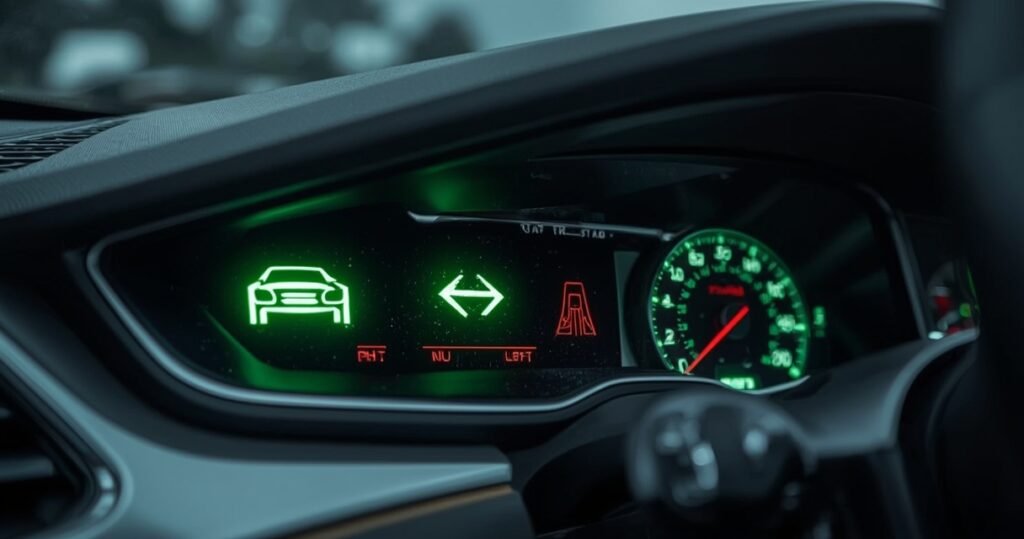
Modern vehicles are equipped with advanced dashboard systems designed to keep drivers informed about their car’s health and operation. Among the many symbols a driver may encounter, seeing 2 green lights on the dashboard can be both reassuring and confusing. While green lights generally indicate normal operation or active features, understanding exactly what each green symbol means is essential for safe and efficient driving. In this article, we break down the meanings of common green dashboard lights, what to do when you see 2 green lights on your dashboard, and how to distinguish them from other warning indicators.
What do green dashboard lights mean?
Dashboard lights are color-coded to quickly communicate their message’s urgency. In most vehicles:
- Red lights signal a serious issue or a safety risk that requires immediate attention (such as low oil pressure or brake system problems).
- Yellow or amber lights usually represent a warning or something that needs checking soon (like low fuel or tire pressure warnings).
- Green or blue lights generally show that a certain system or feature is operating as intended, or that it is engaged (for example, cruise control or headlights).
When you notice 2 green lights on your dashboard, it suggests that two systems or features are currently activated or functioning properly. Unlike red and amber lights, green lights are rarely a cause for alarm, but it is still important to know what they mean for your specific vehicle and driving situation.
Common meanings for 2 green lights on the dashboard
The exact icons and functions that appear as green lights vary by car make, model, and region. The following are typical scenarios where you may see 2 green dashboard lights illuminated at the same time:
- Turn signal indicators: The most frequent reason for 2 green lights is the simultaneous activation of your left and right turn signals — such as when using your hazard lights. The icon depicted is often an arrow pointing left and another pointing right, both flashing green.
- Headlight and fog light indicators: Another possible scenario is when both your headlights (or daytime running lights) and front fog lights are active. These are usually represented by distinct green symbols, one for each system.
- Active safety or drive-assist features: Some vehicles display green dashboard lights when multiple systems such as adaptive cruise control and lane keeping assistance are engaged.
- Eco driving mode and other system statuses: Green lights may also indicate efficient driving modes or that additional environmentally friendly features are turned on.
Your vehicle’s user manual contains a detailed description of each dashboard light. Reviewing it regularly is recommended — especially if new green lights appear or if you are driving an unfamiliar car.
How to interpret 2 green lights on the dashboard
To accurately identify what the 2 green lights mean in your car, consider the following steps:
- Review the symbols: Most dashboard lights use standard icons. For instance, a headlight facing left with horizontal beams typically means headlights are on, while a symbol with a wavy line and three beams usually indicates fog lights.
- Observe their behavior: If the green lights are blinking, they are likely related to turn signals or hazard lights. Steady illumination usually points to ongoing systems like eco mode or active cruise control.
- Check recently activated features: Recall which features you have recently turned on, such as engaging fog lights, using hazard lights, or switching to a specific driving mode.
- Consult the vehicle manual: If in doubt, refer to the specific dashboard symbols section for your model.
Awareness of your car’s dashboard indicators helps ensure you make informed decisions while on the road. If the lights appear unexpectedly, take time to check their meaning during your next stop.
Common green dashboard lights explained
Turn signals and hazard lights
The right and left turn signals appear as green arrows on the dashboard. They illuminate when you signal a turn and flash if hazard lights are engaged. When both arrows are flashing, it means your emergency hazard lights are on. This is the most common occurrence of 2 simultaneous green lights. If the lights flash abnormally fast, it can indicate a bulb failure in one of the signal lights.
Headlights and running lights
A green symbol of a headlight pointing sideways, with beams extending outward, indicates that your headlights or daytime running lights are on. In some cases, this green light coexists with another green symbol if fog lights or automatic beam assist are also active.
Fog light indicators
Front and rear fog lights have their own distinctive symbols. The front fog light is typically a lamp with three downward-slanting beams and a wavy line crossing the beams, while the rear fog light symbol may be red or amber. When both headlights and fog lights are on, you may see 2 green lights simultaneously.
Eco mode
Eco or eco-driving indicators may be shown as a green “ECO” or a leaf-shaped symbol. Some cars illuminate this feature alongside another green light when both eco-driving and a supporting technology, such as start-stop, are active.
Adaptive cruise control and lane-keeping assist
Advanced driver assistance systems are increasingly common, and many display a green light when engaged. If both adaptive cruise control and lane-keeping assist are active, you might see two green indicators together.
Less common green dashboard lights
- Automatic high beams: A green high beam symbol may appear if your vehicle automatically manages headlight intensity, usually in combination with other lights.
- Traction or stability mode indicators: In some cars, a green light shows active traction or stability features (though amber is more common).
- Hybrid or EV system readiness: Electric and hybrid vehicles sometimes use green symbols to show that the electric drive system is ready to operate.
What to do when 2 green lights appear unexpectedly
It’s uncommon for green dashboard lights to require urgent action, but unexpected changes should never be ignored. Here’s a checklist for when you notice an unfamiliar pair of green dashboard lights:
- Confirm which features or systems are currently engaged in your car.
- Monitor performance — if the vehicle is driving normally and there are no warning or red lights, you can continue, but keep an eye out for changes.
- Consult the owner’s manual as soon as you are safely parked.
- If the illumination is accompanied by unusual vehicle behavior (loss of power, unresponsive controls), consider contacting a qualified mechanic.
Expert tips for dashboard light awareness
- Familiarize yourself with your car’s dashboard symbols by reviewing the owner’s manual and, if available, educational materials from the manufacturer.
- Never ignore red or amber lights, which may signal issues requiring immediate attention.
- If you see 2 green lights on your dashboard during normal driving and system performance is unaffected, it typically signals engaged features, not malfunctions.
- Schedule regular vehicle maintenance to prevent warning lights due to mechanical or electrical faults.
- If you rent or borrow a car, ask staff to explain any unfamiliar dashboard indicators before driving.
Common myths about green dashboard lights
- Myth: Green lights always mean “go” or “everything is fine.”
Fact: While green generally signals functioning features, a blinking green light can indicate a malfunctioning signal bulb or require your attention (such as hazard lights accidentally left on). - Myth: You can safely ignore all dashboard lights except red ones.
Fact: Some systems (like adaptive cruise control) use green lights to indicate readiness, but losing a green check-mark light may signal a disabled safety feature. - Myth: All cars use the same dashboard symbols and color codes.
Fact: While there is a trend toward standardization, variations do exist between makes, models, and regions. Always consult your specific manual.
Warnings and when to seek professional help
- If a green dashboard light repeatedly flashes without you engaging the corresponding feature, it may indicate an electrical fault needing diagnosis by a certified technician.
- Never dismantle dashboard components to investigate without proper training; some systems are connected to critical safety features.
- If a system seems unresponsive or if you’re unable to identify a dashboard light’s meaning, schedule a professional inspection.
Conclusion
Dashboard lights are essential for modern vehicle safety and operation. Seeing 2 green lights on your dashboard typically indicates that two systems — such as headlights, turn signals, or drive-assist features — are active and functioning correctly. By familiarizing yourself with the specific symbols and their meanings in your car, you can ensure a safer and more confident driving experience. Remember, green lights are generally a sign of normal operation, but every dashboard indicator deserves proper attention and understanding. For persistent uncertainties or unexpected dashboard behavior, refer to your owner’s manual or consult an automotive professional.