
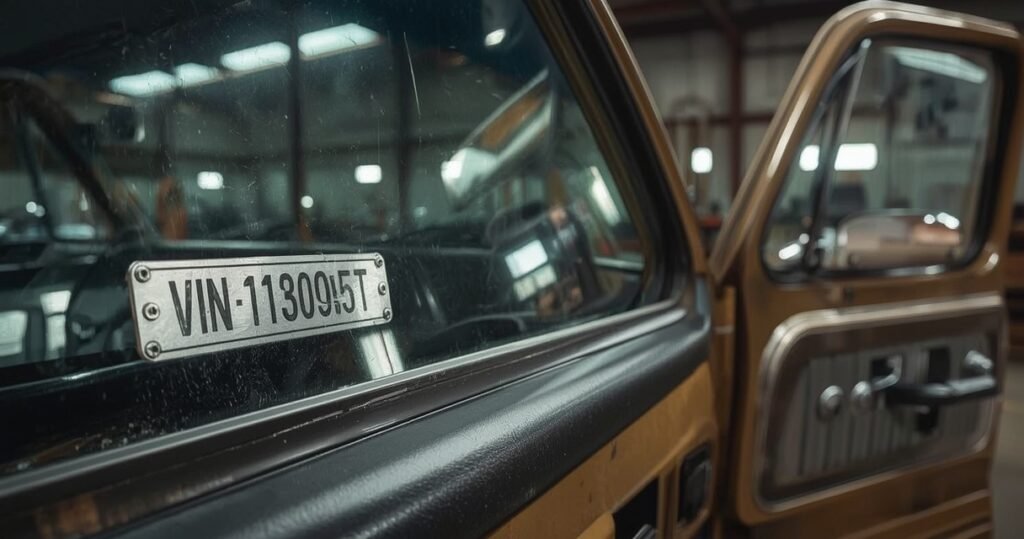
The 1980 Chevy truck stands as a notable icon in automotive history, prized for its rugged durability and classic American design. If you own, are restoring, or are simply curious about a 1980 Chevrolet truck, understanding its vehicle identification number (VIN) can provide an invaluable window into its past and specifications. A VIN acts as a fingerprint for a vehicle, revealing essential information about its origin, features, and production details. In this guide, we’ll explore how to effectively use a 1980 Chevy truck VIN decoder, what you can learn from it, and why decoding this information matters for collectors, owners, and enthusiasts.
What is a VIN and why it matters
A Vehicle Identification Number (VIN) is a unique code assigned to every motor vehicle when it is manufactured. For Chevrolet trucks in 1980, the VIN is composed of 13 characters, combining letters and numbers, and includes details such as the model year, manufacturing plant, engine type, and body style. Decoding the VIN is crucial for:
- Verifying the authenticity of the truck
- Confirming original specifications for restoration
- Tracing ownership history for resale or insurance
- Identifying the correct parts for repairs and maintenance
The structure of a 1980 Chevy truck VIN
The VIN format for Chevy trucks has evolved over the years. In 1980, General Motors (GM) used a 13-character VIN, which was replaced by the now-standard 17-character format in 1981. Each segment of the VIN reveals specific details about the truck, making it essential to understand what each character represents.
Breakdown of the 1980 Chevy truck VIN
- 1st character: Chassis/Drive Line Code (e.g., C = 2WD, K = 4WD)
- 2nd character: Engine Type (e.g., H = 305 V8, L = 350 V8, etc.)
- 3rd character: Series (indicates size and weight class, e.g., 1 = 10 Series, 2 = 20 Series)
- 4th character: Body Style (e.g., P = pickup, S = Suburban)
- 5th-7th characters: Cab/Body Type and optional features codes
- 8th character: Model Year (e.g., A = 1980)
- 9th character: Assembly Plant Code (e.g., F = Flint, Z = Fremont)
- 10th-13th characters: Sequential Production Number
It’s important to note that slight variations may exist depending on the production plant or specific trim level.
How to use a 1980 Chevy truck VIN decoder
If you want to unlock the secrets of your 1980 Chevy truck, you can use a VIN decoder—either in the form of a reference chart, guide, or an online database. Here’s a step-by-step guide:
- Locate the VIN: On 1980 Chevy trucks, the VIN is typically found on a metal plate inside the dashboard on the driver’s side, visible through the windshield, and sometimes on the driver’s door jamb or in the engine bay.
- Write down all 13 characters: Double-check for accuracy, as one incorrect character can lead to false information.
- Reference a reliable decoder: Use automotive reference books, trusted online databases, or manufacturer-supplied charts to start decoding each segment of the VIN.
Professional assessments or classic Chevy clubs may offer further assistance for especially rare or ambiguous VIN formats.
What information can a decoder reveal?
Decoding your 1980 Chevy truck’s VIN can provide a range of historical and technical data, including:
- Body style and trim details
- Factory-installed engine type and specs
- Original assembly plant location
- Production sequence number (helpful for identifying early or late production runs)
- Weight class and series (half-ton, three-quarter ton, etc.)
This information is valuable when restoring a vehicle to original condition, verifying that numbers match for classic car shows, or confirming factory-installed equipment when selling or insuring the truck.
Common myths and misunderstandings
The world of vintage vehicles is rife with myths about VINs, especially for pre-1981 models like the 1980 Chevy truck. Here are some prevalent misconceptions:
- Myth: A VIN tells you everything about every custom feature.
- Fact: The VIN provides basic manufacturer details, but not every factory or dealer-added accessory.
- Myth: All Chevy trucks from 1980 used the same VIN format.
- Fact: While there was a general standard, minor differences may exist based on assembly plant and trim level.
- Myth: VINs reveal mileage or accident history.
- Fact: The VIN alone will not disclose usage history or prior accidents; other documentation is needed.
- Myth: If the VIN is unreadable or missing, there is no way to recover the vehicle’s history.
- Fact: Secondary VIN locations or documentation may help, but expert verification may be necessary if the main VIN plate is damaged or missing.
Expert tips for Chevy truck enthusiasts
- Document everything: When restoring or maintaining a classic truck, keep detailed records including photos of the VIN plate and any related documentation.
- Beware of tampered VINs: Physical VIN plates should show signs of original attachment. If rivets or plates appear altered, inspect further or consult an automotive historian to confirm legitimacy.
- Use multiple references: No single source is infallible—cross-check information with trusted automotive publications, classic Chevy clubs, and manufacturer archives.
- Understand limitations: Pre-1981 VINs may not be recognized by some modern DMV or insurance systems; manual decoding might be required when titling or insuring the vehicle.
- Consider professional help: For high-value or rare trucks, a professional appraisal or authentication can provide extra assurance regarding originality and provenance.
Why VIN decoding is essential in restoration and resale
VIN decoding plays a crucial role not only in appreciating the truck’s heritage but also in ensuring authenticity during restoration projects. Restorers often rely on VINs to purchase matching parts, verify color codes, and maintain historical accuracy. For resale, a clear and accurate VIN history boosts buyer confidence, demonstrates transparency, and supports fair market valuation. Insurance companies may also require accurate VIN details to provide correct coverage and rates.
Risks and warnings: When VIN issues arise
Mismatched or tampered VINs can be a red flag, sometimes indicating incomplete restorations, theft, or attempts to misrepresent a vehicle’s identity. Here’s what to watch for:
- Altered or replaced plates: Walk away from vehicles where the VIN plate seems altered, loose, or replaced unless a verified reason is provided.
- Incomplete VINs in documentation: Double-check paperwork for consistency. Discrepancies may point to clerical errors—or to questionable history.
- Legal implications: In some jurisdictions, it is illegal to alter, remove, or obscure a vehicle’s VIN.
Conclusion: The value of decoding your 1980 Chevy truck VIN
Understanding your 1980 Chevy truck’s VIN is much more than a technical exercise—it is key to unlocking the vehicle’s story, ensuring authenticity, and preserving its value for years to come. Whether you’re a seasoned collector, a weekend restorer, or simply passionate about vintage Chevy trucks, using a 1980 Chevy truck VIN decoder can guide you toward informed ownership and a deeper appreciation of your vehicle’s unique legacy. Always rely on reputable sources and, when in doubt, seek expert assistance to ensure accuracy and peace of mind.