
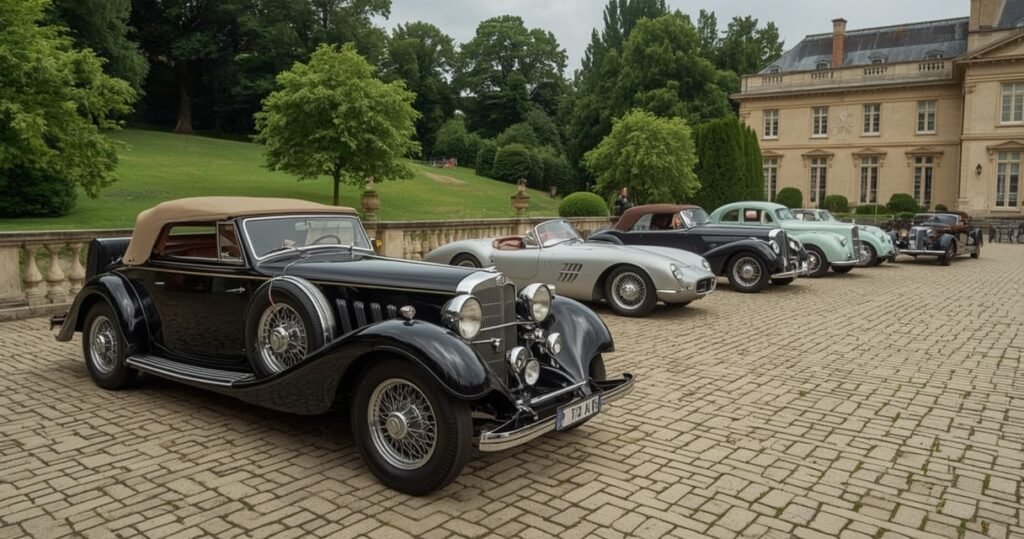
The 1930s was a defining decade for the German automotive industry, renowned for its groundbreaking advances in engineering, luxury, and motorsport. Despite economic challenges and political upheaval, German car manufacturers introduced innovative designs and technologies that would shape the future of automaking. From streamlined bodies and supercharged engines to monumental achievements on the racetrack, 1930s German cars remain symbols of both technical prowess and complex history. This article explores the key developments, iconic models, influential manufacturers, and enduring legacy of 1930s German cars, offering an in-depth look at their engineering, cultural significance, and the myths that surround them.
The automotive landscape in 1930s Germany
During the interwar period, the German automotive industry was heavily influenced by advances in engineering, increasing competition, and the pressures of a changing political climate. Despite the economic impact of the Great Depression, manufacturers continued to push the boundaries of innovation.
Key manufacturers of the era
- Mercedes-Benz: Known for luxury and advanced engineering, Mercedes-Benz led with models like the 770 “Grosser Mercedes” and the agile 500K and 540K.
- Auto Union: A conglomerate comprising Audi, DKW, Horch, and Wanderer, Auto Union pioneered front-wheel drive and brought aerodynamic concepts to the public with models such as the Horch 853.
- BMW: Famous for the elegant BMW 328 sports car and refined sedans, BMW cemented its reputation for performance and design during this decade.
- Opel: Backed by American investment, Opel mass-produced cars like the Opel Olympia, introducing monocoque bodies and accessible pricing.
- Adler: A mid-size car innovator, Adler popularized streamlined forms with the Adler Trumpf and Adler Diplomat.
Engineering innovations and design breakthroughs
German car makers of the 1930s were ingenious in their pursuit of performance, safety, and style. Many features that are standard today were considered marvels of their time.
Aerodynamics and the “streamline” era
- 1910s-1920s models were typically boxy, but by the late 1920s and throughout the ’30s, German designers began embracing aerodynamic bodywork inspired by aviation.
- Cars like the Mercedes-Benz 540K and the Adler Trumpf showcased flowing fenders, sloping hoods, and covered wheels, reducing drag and improving speed.
- The Volkswagen “Beetle” prototype, developed in this period, embodied the ideals of accessible, streamlined transport.
Powerful engines and supercharging
- In pursuit of speed and performance, Mercedes-Benz and Auto Union employed superchargers (Kompressor engines), giving models like the 500K instant acceleration and higher top speeds.
- The development of inline-six and V8 engines allowed for greater horsepower while improving reliability and smoothness.
Chassis, safety, and mechanics
- The adoption of independent front suspension by manufacturers like Opel and Mercedes improved handling and comfort.
- Steel monocoque construction, first mass-produced by Opel Olympia in 1935, increased crash safety and reduced weight — a significant step forward from the traditional body-on-frame designs.
Iconic models of 1930s German cars
Several models from the 1930s stand out for their influence on automotive design and motorsport history, many of which are now treasured classics.
Mercedes-Benz 770 “Grosser Mercedes”
- An ultra-luxurious vehicle favored by heads of state and dignitaries, the 770 featured a massive 7.7-liter engine and, later, supercharged power.
- Its imposing design, graceful lines, and engineering complexity set a benchmark for luxury sedans.
Auto Union Type C Grand Prix car
- Developed with Ferdinand Porsche, the Auto Union Type C dominated pre-war racing, featuring a mid-mounted V16 engine and advanced suspension.
- Its success in motorsports showcased German engineering and influenced race car design for decades.
BMW 328
- The BMW 328 roadster is celebrated for its light weight, striking looks, and a powerful inline-six engine.
- It won multiple races, including the prestigious Mille Miglia, and is now regarded as one of the most beautiful sports cars ever made.
Opel Olympia
- It was the first European car with an all-steel unitary body for mass production, offering safety, economy, and modern design.
- The Olympia’s monocoque construction paved the way for the future of automotive engineering.
Adler Trumpf
- This mid-sized car featured front-wheel drive, streamlined styling, and became popular for urban drivers seeking efficiency and modernity.
German cars in motorsport during the 1930s
No history of 1930s German cars is complete without acknowledging their achievements on the racetrack. The decade is sometimes called the “Silver Arrows era,” referencing the iconic racing cars of Mercedes-Benz and Auto Union.
The rise of the Silver Arrows
- A legend was born when Mercedes-Benz and Auto Union introduced lightweight, silver-painted Grand Prix cars that achieved unprecedented speeds.
- Technological advances such as advanced aerodynamics, supercharged engines, and innovative chassis designs enabled several world speed records.
- Drivers like Rudolf Caracciola and Bernd Rosemeyer became household names, inspiring generations of racing enthusiasts.
Controversy and propaganda
- Motorsport success was used by the National Socialist regime to showcase German technological strength, and car races often became a matter of political prestige.
- While the feats on the track were genuine, it’s important to recognize the complex interplay between technical achievement and propaganda during this period.
Common myths and realities about 1930s German cars
Owing to their association with dramatic historical events and extraordinary achievements, several myths surround 1930s German cars. Here are a few clarified by historians and automotive experts:
- Myth: All German cars from the 1930s were government projects. Fact: Most luxury and sports cars were developed by private manufacturers, though state influence increased by the late 1930s for mass-market vehicles like the VW Beetle.
- Myth: Mercedes and Auto Union always competed on equal footing. Fact: Each manufacturer had different strengths; for example, Auto Union’s mid-engine layout was experimental for its time, while Mercedes focused on refinement and power.
- Myth: Streamlined design began in Germany. Fact: While German makers were leaders, the international community of engineers pursued aerodynamic cars, with parallel developments in France, Italy, and the United States.
Expert recommendations: buying, restoring, and collecting
For classic car enthusiasts or collectors, acquiring and maintaining a 1930s German vehicle is both an aspirational hobby and technical challenge. Experts caution that while these automobiles are undeniably captivating, they require significant resources and attention.
- Rarity and value: Original models from the 1930s are rare, making them highly sought after. Purchase decisions should be backed by authentication of provenance and thorough documentation.
- Restoration: Due to the complexity of their engineering, restoration should be entrusted to experienced professionals. Many vintage German cars contain hand-crafted parts that may require custom fabrication.
- Maintenance: Frequent, expert maintenance is essential. Modern fuels and lubricants must be carefully matched to the requirements of these early engines and systems.
- Insurance and investment: Given their historical significance, insuring classic 1930s German cars involves special considerations. Many are regarded as solid long-term investments, but market values can fluctuate with trends in collecting and historical awareness.
The legacy of 1930s German cars: influence and impact
The story of 1930s German cars is a complex tapestry of engineering mastery, socioeconomic change, and cultural influence. The technical innovations pioneered during this decade laid the groundwork for postwar advancements and remain an essential part of automotive heritage.
- Streamlined design and monocoque construction have become standard features in modern vehicles.
- The legacy of motorsport continues to help develop safety and performance technologies found in road cars today.
- Current German automakers, including Mercedes-Benz, BMW, and Audi, still draw inspiration from their landmark models and racing legacy of the 1930s.
Conclusion: appreciating the heritage responsibly
1930s German cars represent more than just stylish forms and powerful engines—they are artifacts of resilience and ambition during a pivotal era in history. Whether admired for their engineering, pursued by collectors, or studied as symbols of a complex past, these automobiles deserve recognition for their role in shaping the global automotive landscape. Appreciating their legacy means acknowledging both their technical triumphs and the historical context in which they were created.