
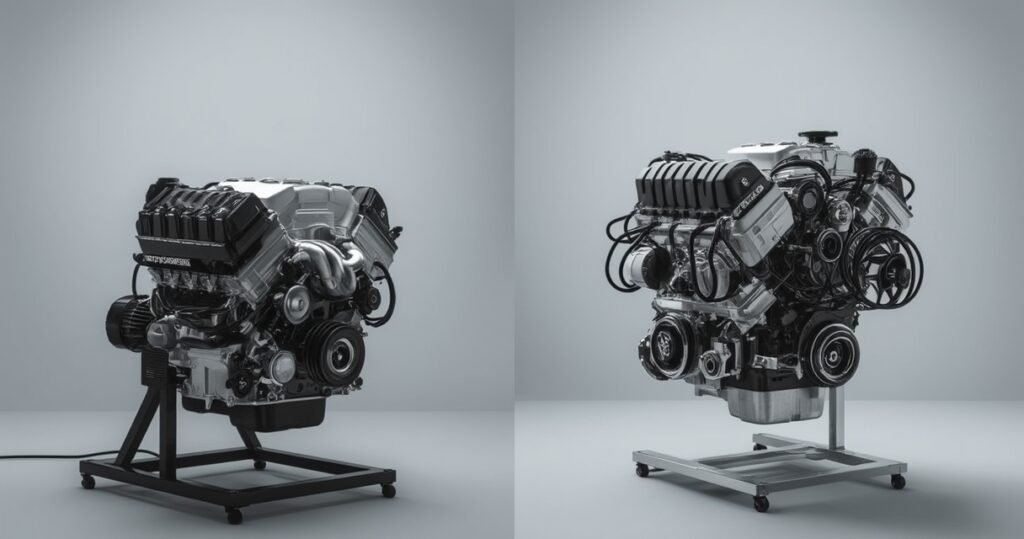
When choosing a new car or comparing different vehicle models, the question of engine size often comes up. Two of the most common engine displacement options found in passenger vehicles are 1.5-liter (1.5L) and 2.5-liter (2.5L) engines. But what do these numbers actually mean, and how do they impact performance, fuel efficiency, driving experience, and long-term costs? Understanding the differences between a 1.5L vs 2.5L engine is essential for anyone looking to make an informed purchase or simply curious about automotive technology. This article explores these differences in detail, highlighting advantages, drawbacks, and expert insights to guide your decision.
What engine displacement means
Before comparing 1.5L vs 2.5L engines, it’s important to understand what engine displacement represents. Displacement refers to the total volume of all the cylinders in an engine, where combustion takes place. This volume is measured in liters (L) or cubic centimeters (cc). For instance, a 1.5L engine has a total displacement of 1.5 liters, while a 2.5L engine offers 2.5 liters.
Generally, engine displacement is associated with potential power output, with larger engines typically capable of producing more horsepower and torque. However, advancements in engineering, such as turbocharging and direct injection, allow smaller engines to deliver remarkable power, often rivaling or exceeding that of traditional larger engines.
Key differences: 1.5L vs 2.5L engine
Performance and power
- 1.5L engines: These engines are often found in compact cars, small SUVs, and hybrid vehicles. Naturally aspirated versions may produce between 100–130 horsepower, while turbocharged variants can reach up to 180–200 horsepower. While responsive at lower speeds and efficient for city driving, a 1.5L engine may not deliver the same acceleration or highway passing power as its larger counterparts.
- 2.5L engines: Often featured in mid-size sedans, larger SUVs, and light trucks, 2.5L engines tend to produce more horsepower (typically 180–250 horsepower) and, crucially, more torque. This results in swifter acceleration, better towing capacity, and superior performance during high-speed or uphill driving.
Fuel efficiency
- 1.5L engines: Smaller displacement generally means less fuel is consumed per combustion cycle. Modern 1.5L engines typically excel in fuel economy, especially when equipped with advanced technologies like direct injection and turbocharging. City and highway combined fuel ratings often reach 30–40 miles per gallon (mpg) or higher, depending on the vehicle.
- 2.5L engines: While advancements have made larger engines more efficient than in the past, 2.5L engines usually consume more fuel because they burn more air-fuel mixture in each cycle. Combined mpg ratings often fall in the range of 25–35, varying with the vehicle’s weight, drivetrain, and whether the engine is turbocharged or naturally aspirated.
Driving experience
- 1.5L engines: Offer nimble handling, smooth city driving, and easy maneuvering in urban environments. However, carrying heavy loads, long-distance highway driving, or frequent high-speed acceleration may reveal performance limits.
- 2.5L engines: Deliver more robust acceleration, smoother highway cruising, and greater confidence when merging or overtaking. Larger engines can also handle additional passengers or cargo without feeling underpowered.
Cost considerations
Initial purchase price
Vehicles equipped with a 1.5L engine are often marketed at a lower price point than those with a 2.5L engine, reflecting both the lower material costs and the vehicle category. However, trim level, additional features, and brand reputation can significantly influence final pricing.
Long-term maintenance
Traditional wisdom suggests that smaller engines are cheaper to maintain, primarily due to less complex mechanical parts and reduced wear and tear. However, the rise of advanced technologies such as turbocharging in 1.5L engines can lead to higher maintenance or repair costs if not properly maintained. Larger engines, while potentially more durable for strenuous use, may have higher costs for components like oil, coolant, and timing belts due to their size and complexity.
Resale value
Market demand can affect resale value. In regions or buyer segments where fuel efficiency is highly prized, 1.5L engines may hold their value better. In contrast, markets that value power or towing capacity may favor 2.5L variants.
Environmental impact
Smaller engines generally produce fewer emissions, especially when paired with hybrid or mild-hybrid systems. This means 1.5L engines can be a responsible choice for eco-conscious drivers seeking reduced carbon footprints. However, it’s essential to note that driving habits significantly influence actual emissions—rapid acceleration, excessive idling, or frequent high-speed driving can negate the advantages of a smaller engine.
2.5L engines, while typically emitting more CO2 per mile, have benefited from advancements such as variable valve timing, cylinder deactivation, and hybrid integration, helping bridge the gap between performance and sustainability.
Engine technologies: leveling the playing field
The simple 1.5L vs 2.5L engine comparison is complicated by recent technological developments:
- Turbocharging: Increasingly common in 1.5L engines, turbochargers force extra air into the combustion chamber, increasing power output without increasing size or displacement. This allows small engines to deliver performance comparable to larger, naturally aspirated engines.
- Direct injection: Both 1.5L and 2.5L engines now frequently use direct fuel injection, which improves combustion efficiency, power, and emissions.
- Hybrid technology: Pairing smaller engines with electric motors can provide instantaneous torque and exceptional fuel economy.
- Cylinder deactivation: In larger engines, modern systems can temporarily deactivate some cylinders under light load, significantly improving fuel efficiency.
Expert recommendations: choosing between 1.5L and 2.5L
Which engine is best depends on your individual needs, driving style, and typical conditions:
- Urban commuters and light drivers: If most of your driving occurs in the city or involves light loads, a 1.5L engine offers more than enough performance while maximizing fuel efficiency and minimizing operating costs.
- Frequent highway drivers, families, or those hauling loads: The extra torque, power, and flexibility of a 2.5L engine deliver a more relaxed and capable driving experience. This can be especially important for long trips, frequent highway merging, or transporting passengers and cargo.
- Technology enthusiasts: Consider hybrid or turbocharged options, which can provide performance and efficiency benefits regardless of displacement.
- Eco-conscious drivers: While 1.5L engines are typically greener, look for certified low-emission vehicles or hybrid models for maximum environmental benefit.
Myths and misconceptions regarding engine size
- Myth: Bigger engines are always better. Modern 1.5L engines, especially those with turbochargers, can match or outperform traditional larger engines in many scenarios. What matters most is how the engine technology harmonizes with the vehicle’s weight and drivetrain.
- Myth: Small engines are underpowered. Direct injection, turbocharging, and advanced tuning have bridged the gap significantly. However, there will always be limits to how much power can be reliably extracted from a small displacement.
- Myth: Bigger engines are always less efficient. Some modern, larger engines achieve excellent fuel economy, particularly when integrated with hybrid systems or using cylinder deactivation on highways.
Warnings and considerations
- Turbocharged maintenance: If you opt for a 1.5L turbo engine, follow manufacturer maintenance schedules closely. Turbochargers are complex and can suffer premature wear if neglected.
- Avoid overloading: Using a 1.5L engine to repeatedly carry heavy loads or tow beyond manufacturer recommendations can result in undue wear and reduced engine life.
- Driving habits matter: Aggressive driving can quickly erode the fuel efficiency advantage of smaller engines, while smooth acceleration and steady speeds benefit all engine sizes.
Interesting facts about engine sizes
- The trend toward smaller, more efficient engines has been driven by stricter global emissions standards and consumer demand for lower operating costs.
- Some luxury and performance vehicles now offer turbocharged four-cylinder engines (like a 1.5L) that outperform older V6 or even V8 engines.
- Hybridized 2.5L engines have become increasingly popular in mid-size SUVs and sedans, offering a blend of efficiency and power.
Conclusion: making an informed engine choice
The decision between a 1.5L vs 2.5L engine hinges on a careful assessment of your driving needs, performance expectations, and priorities. Thanks to technological advances, both engine sizes can offer a satisfying mix of power, efficiency, and reliability. Urban commuters and cost-conscious drivers may gravitate toward the 1.5L, while those seeking more versatility and performance may find the 2.5L a better fit. Regardless of your choice, modern automotive engineering ensures you don’t have to sacrifice too much in one area to benefit in another.

An experienced automotive writer and industry analyst with a strong passion for cars, engineering, and road performance. Specializes in delivering clear, insightful reviews, detailed comparisons, and practical advice for everyday drivers, gearheads, and those looking to make informed vehicle choices.